So the setup of the DVD we watched last night was a television reunion of a few old folk singers who had hits in the sixties. Christopher Guest’s A Mighty Wind isn’t as good as Best In Show or This Is Spinal Tap, but it’s a passable and amusing way to spend an evening. It seemed less realistic than other spoof-documentaries, and I found some of the deleted scenes on the DVD to be funnier than the movie itself. However, there are some good performances and an interesting soundtrack, and it does make you smile.
So I have to take it all back to TV pop stars. Last night I went to The New Wimbledon Theatre to see the touring production of Jesus Christ Superstar. PY bought tickets for my birthday. I had heard the soundtrack as a child but never seen the musical until I was in Norway a couple of years ago when I saw it in Norwegian – which of course made little sense to me but was an amazing staging in an outdoor setting. This one was, thankfully, in English. Fame Academy star James Fox was Judas, and he put in a superb performance. He was very impressive, with a much more powerful voice than I thought he had the last time I saw him perform his own material.
Glenn Carter was excellent as Jesus (although it seems to have been a role he has played many times), and the rest of the cast were also very good. The only thing I found a little odd was Herod’s Song, which was unnecessarily campy, but overall, it was an excellent night out and worth seeing. Last night was the first night, and it was sold out. I hope the rest of the run is like that, as it deserves it.
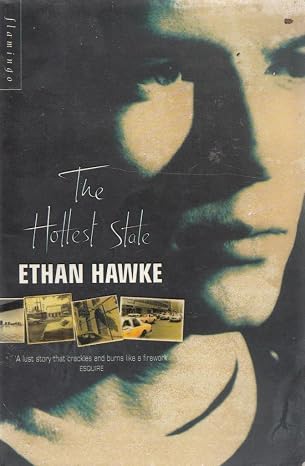
Ethan Hawke’s Hottest State is a tale of obsessive love set in New York (and Paris) when William (’20 sexy, confident’) meets Sarah and they embark on a relationship which really is roller-coaster-like. Through it we explore William’s relationship with his mother, absent father, and with himself. It’s clever yet not distant, sensitive but not sentimental, but, ironically given the title, left this reader a little cold. The Hottest State is entertaining and well-written, but capturing that painful, gut-wrenching emotion that is obsessive first love must be hard for any novelist, and Hawke doesn’t quite pull the reader in. As a reader, you will observe William, but you will not become emotionally attached, and Sarah’s quirkiness – which initially seems endearing – eventually distances you from her, leaving William’s obsessive feelings a mystery. Despite those reservations, Ethan Hawke’s first novel suggests a promising career as a novelist.
To be honest, the reason I put Camp on the DVD list from LoveFilm is that Jase’s review last year sent me to the official site, which made me think it looked cool. It was, I guess, a typical teenage rites of passage movie with an interesting twist, as it is set at a summer camp based on mescal theatre. It’s fun and interesting – some great performances and some fantastic singing. It’ll not blow you away, but it will make you laugh (and it may make you cry). Daniel Letterle as Vlad is, of course, the heartthrob that we’d all love.
Oh, just go watch it. Laugh and sign then order the soundtrack (I just did!)
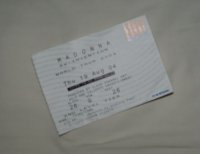
That statement does not make me a huge Madonna fan – although I am partial to many of her hits and, unlike some of my friends, I think American Life is a great album (then again, I also like some of Blue’s material so who am I to judge musical tastes?) and she is most certainly a performer.
So, when commenting on a Madonna concert, what should you say? Earls Court is a huge venue. For those of you who haven’t been, you should be aware that it’s very stadium-like. We sat in the back left corner, so it was like she was at the opposite goalpost. And it’s in that context that you will understand why I didn’t think it was that good.
Madonna can put on a show. She is the undisputed queen of showmanship. And therein lies the problem. She performs a West End show of the variety you need to see. And she performs them at West End prices but to stadium-sized audiences. The audio is show-like, and you doubt that she’s singing live the whole time – although I suspect a lot of it is live. It’s just very well produced and sounds like her CDs and, for me, that isn’t the point of going to see live music: somehow you need to believe that they are performing live. Add to that the fact that you can’t see the spectacular, and you have a fun but ultimately disappointing evening.
Not sure what has happened, but weeks have passed since we went to the cinema, and now I have done two films two nights in a row.
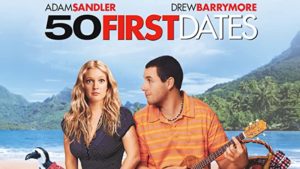
50 First Dates had a preview last night (I think it opens today), and it was showing at the right time for us in Wimbledon, so we thought that we would give it a go. I expected an Adam Sandler gag-fest and, really, it wasn’t. I am not a fan of many of the movies Adam Sandler has been in, but this is heart-warming (and humorous) and was a big surprise.
Sandler’s character (Henry Roth) meets Drew Barrymore’s Lucy in a breakfast diner and tries to pull all his best lines on her. None of them really work, but he falls for he,r and so begins a touching story (if somewhat unbelievable) and a thoroughly entertaining evening out. You may, or may not, really be suspending your disbelief as the woman with no memory seems to fall for Roth, but I think you’ll get over that.
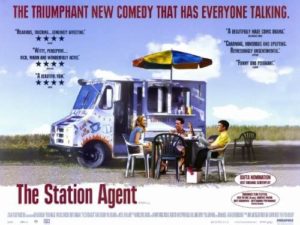
A quick review of The Station Agent, a film a saw on the spur of the moment last night.
It’s a well-written, superbly acted film where – almost – nothing happens. And, unlike many films of its type it’s well-worth watching because the characters are both fascinating and endearing. Fin is, as they say, vertically challenged and moves into a parochial American backwater town where a Cuban hot dog man sells his wares to (more-or-less) nobody and Olivia, an artist going through a messy divorce who almost drives over our hero (twice). They are an odd set of warm characters performed brilliantly by the cast.
It’s also a comedy and succeeds in not turning farcical with lots of slapstick about shorter people. The comedy is tender, clever and entertaining, but it’s not a belly-laugh-a-minute film.
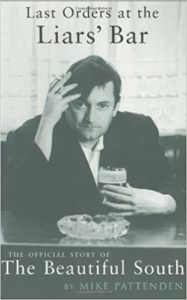
Mike Pattenden’s Last Orders at the Liars’ Bar (The Official Story of The Beautiful South) is much more the biography of Paul Heaton than the title (although perhaps not the cover picture) suggests. He’s the architect and driving force behind both The Housemartins and The Beautiful South. Last Orders charts the rise and break-up of the former and the enduring presence of the latter on the album charts – all the way to the release of their seventh album, Quench.
Pattenden does seem to get under the band and the talent behind the world’s Perfect Ten, Rotterdam, and Song For Whoever. In places it does seem a little (although not overly) sycophantic, but it reads well and provides interesting detail on life behind the scenes, and in the pub, with The Beautiful South. Reading it a couple of years after it was published will leave you wanting more for you will know where the band went next – they definitely did not stop recording – which is a little disappointing although hardly the fault of the author.
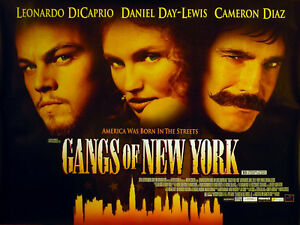
Earlier tonight, and once again thanks to the joys of dvdsontap, PY and I watched Martin Scorsese’s 19th-century epic, Gangs of New York, on DVD. Apparently, Daniel Day-Lewis came out of a kind of retirement to film it.
The film tells us America was not quite the happy melting pot of modern thinking. It’s an interesting mix of epic cinema and a predictable story: DiCaprio seeks to avenge his father’s death and falls for Cameron Diaz in the process, while, all around, the poor (literally) fight for survival against the corruption of the powerful. The sight of the coffins brought back from the Civil War reminds us of another part of America’s past. If the movie is to be believed, Irish immigrants were marched off one ship to another, where they acquired uniforms and the promise of ‘three meals a day’ on their way to a death further south.
Gangs of New York looks stunning but fails to deliver. Day-Lewis has a Munchausen moustache, which is more absurd in pictures than it is in character, but still provides an amusing diversion. The movie is long, but apparently not as long as it was meant to be. A difficult film to decide upon.
Thanks to the joy of dvdsontap, I have just watched Michael Caine in The Quiet American, the adaptation of Graham Greene’s novel about an American spy, Alden Pyle (Brendan Fraser).
Pyle is a US agent backing an anti-communist force in Vietnam who befriends British journalist Thomas Fowler (Caine) before becoming part of a love triangle with a local Vietnamese girl, Phuong (Do Thi Hai Yen).
Caine was superb as the Siagon-based reporter – an understated performance that steals the show. The movie is well produced and the atmosphere of the Far-East brilliantly portrayed. I would never have gone to the movies to see this but I am so glad that I added it to the DVD list.